A deep technical look at how modern air defense systems work, from radar networks and missile interception to electronic warfare and the role of AI in real-time threat assessment. We explore the engineering behind layered defense, current strategies used by nation-states, and the most active research frontiers in the field.
1. What Is an Air Defense System?
An air defense system is a coordinated network of sensors, command nodes, and weapons designed to detect, track, and neutralize aerial threats. These threats include manned aircraft, unmanned aerial vehicles (UAVs), cruise missiles, ballistic missiles, and increasingly, hypersonic glide vehicles.
The core challenge is straightforward to state and extraordinarily difficult to solve: identify a fast-moving object in a vast volume of airspace, determine whether it is hostile, and destroy it before it reaches its target. Every component in the system exists to serve that chain of events.
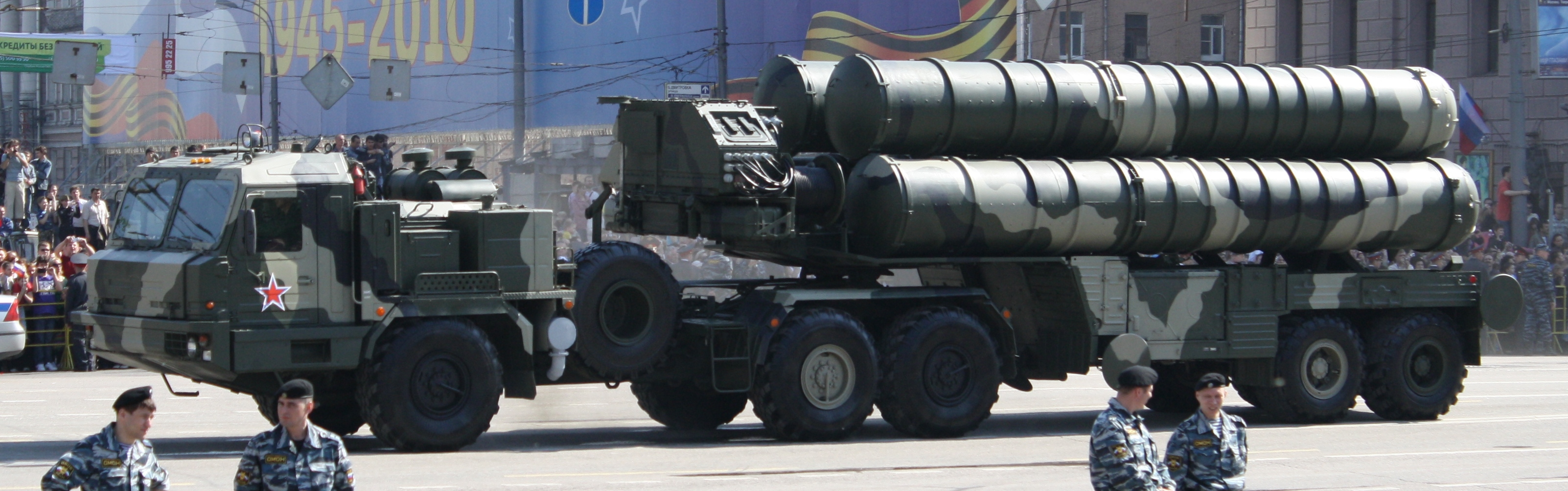
S-400 Triumf TEL vehicle. A modern SAM battery integrates detection, tracking, classification, engagement, and assessment into a single coordinated system. Photo: Wikimedia Commons / CC BY-SA 3.0

| Stat | Value |
|---|---|
| Hypersonic threat speed | Mach 5+ |
| Typical reaction window | <10s |
| Modern radar range | 400km+ |
| Target Pk for S-400 | 99.7% |
2. Layered Defense Architecture
No single weapon system can address every type of threat. Modern air defense is organized in concentric layers, each optimized for a different engagement envelope. This is called Integrated Air Defense System (IADS) architecture.
Long-Range Layer (150-400+ km)
Designed to engage high-altitude targets at maximum standoff distance. Systems like the S-400 Triumf, Patriot PAC-3, and THAAD operate in this layer. These systems use powerful search radars with large antenna apertures and long-range interceptor missiles with active radar homing seekers.
The goal is to force enemy aircraft to operate at low altitude or stand off at distances that reduce weapon effectiveness. Even if the interceptors miss, the defensive bubble changes enemy behavior and limits operational freedom.
Medium-Range Layer (30-150 km)
This layer handles threats that penetrate the long-range envelope or approach from angles not covered by the outer ring. Systems include the Buk-M3, NASAMS, and IRIS-T SLM. They typically use semi-active radar homing or command-guided missiles with shorter flight times and higher maneuverability.
Short-Range and Point Defense (0-30 km)
The last line of defense protecting specific assets: airfields, command centers, power stations. This includes systems like the Pantsir-S1 (combining guns and missiles), Gepard, and Iron Dome. Reaction time is the critical parameter here. The system must detect, decide, and fire in seconds.
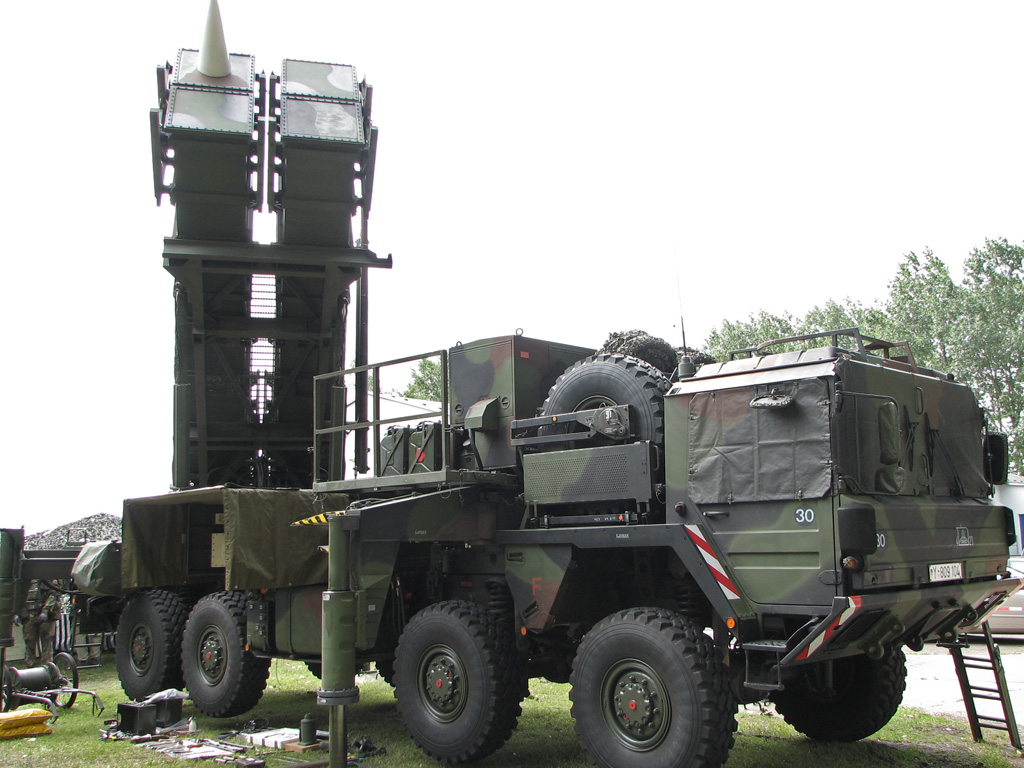
A Patriot missile battery. Patriot operates in the medium-to-long range layer of a layered IADS, forming the backbone of NATO air defense. U.S. Army / Public domain

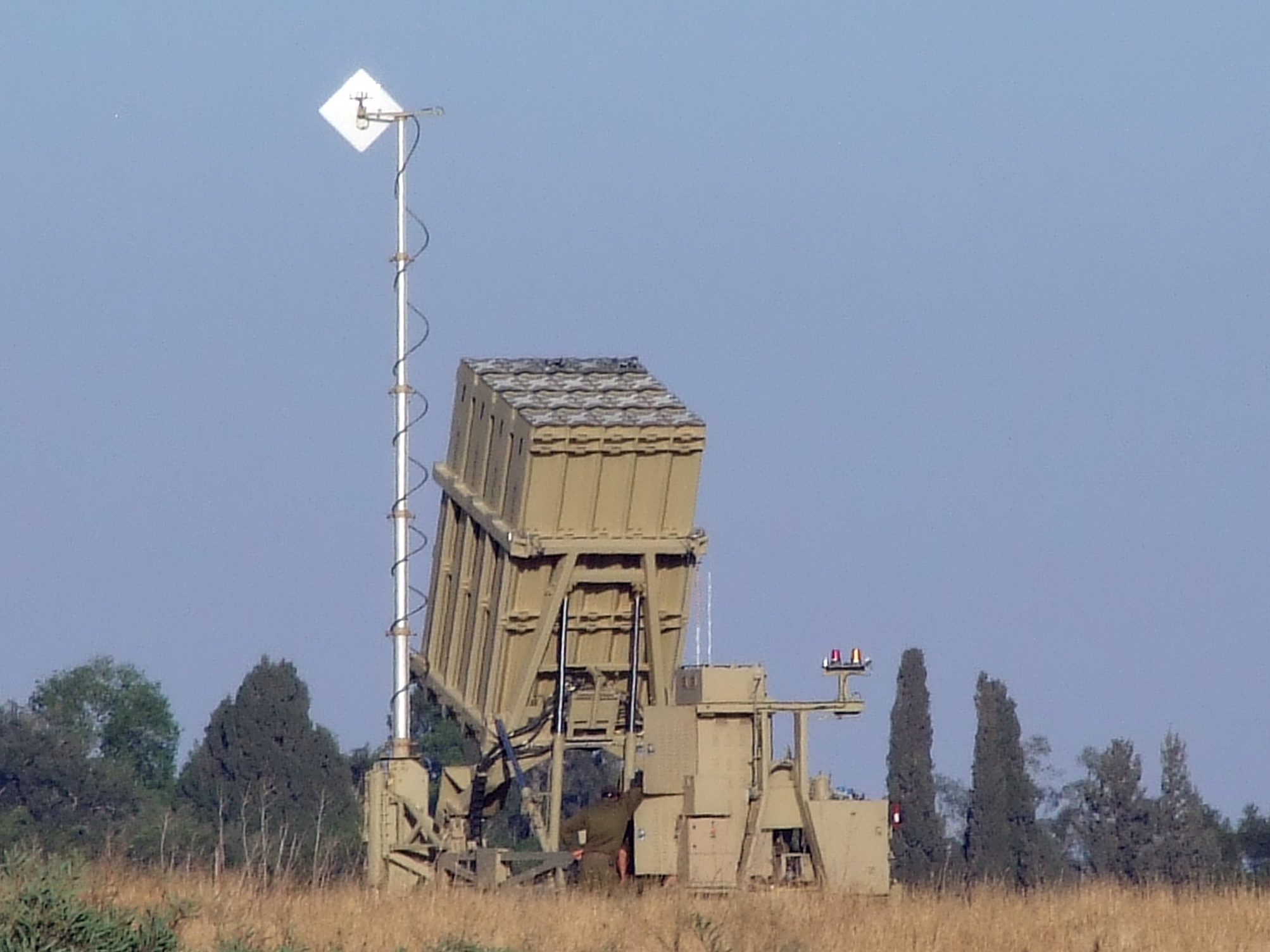
An Iron Dome launcher battery near Sderot, Israel. Iron Dome is the world's most combat-proven short-range air defense system, intercepting rockets, artillery, and mortars at the point-defense layer. Photo: IDF / CC BY-SA 3.0

Why layering matters: A single-layer system creates a binary outcome: it either works or the threat gets through. Layered defense creates multiple engagement opportunities. If the probability of kill (Pk) per layer is 0.7, three independent layers give a cumulative probability of 1 - (0.3)^3 = 0.973. This stacking effect is the mathematical foundation of all modern IADS design.
3. Radar: The Sensor Backbone
Radar is the primary sensor for air defense. It works by emitting electromagnetic pulses and measuring the time delay of reflected returns. From this, you extract range, azimuth, elevation, and radial velocity (via Doppler shift).
Radar Types in Air Defense
Search radars scan large volumes of airspace to find targets. They operate in lower frequency bands (VHF, UHF, L-band) for long range and use rotating antennas or electronically scanned arrays. Detection range scales with the radar equation: range is proportional to the fourth root of (transmitted power × antenna gain² × target radar cross-section).
Tracking radars lock onto specific targets to provide the precise position data needed for missile guidance. They operate in higher frequency bands (X-band, Ku-band) for better angular resolution. Modern Active Electronically Scanned Arrays (AESAs) combine search and track functions by steering multiple beams simultaneously.
Fire control radars provide the final guidance data. Some missile systems use continuous-wave illumination radars that paint the target for semi-active radar homing missiles. Others use track-via-missile (TVM) or active radar homing where the missile carries its own seeker.
Dealing with Stealth
Stealth aircraft are designed to minimize radar cross-section (RCS) primarily against high-frequency radars (X-band and above). Lower-frequency radars (VHF, L-band) can detect stealth targets because the aircraft surfaces become resonant at wavelengths comparable to their geometric features. This is why several modern IADS include dedicated VHF search radars as stealth-detection components.
However, low-frequency radars lack the resolution for precise tracking and fire control. The operational challenge is detecting a stealth target on VHF radar, then cueing a higher-frequency tracker onto it before the target maneuvers out of the engagement envelope. This sensor fusion problem is one of the most active areas in current air defense research.
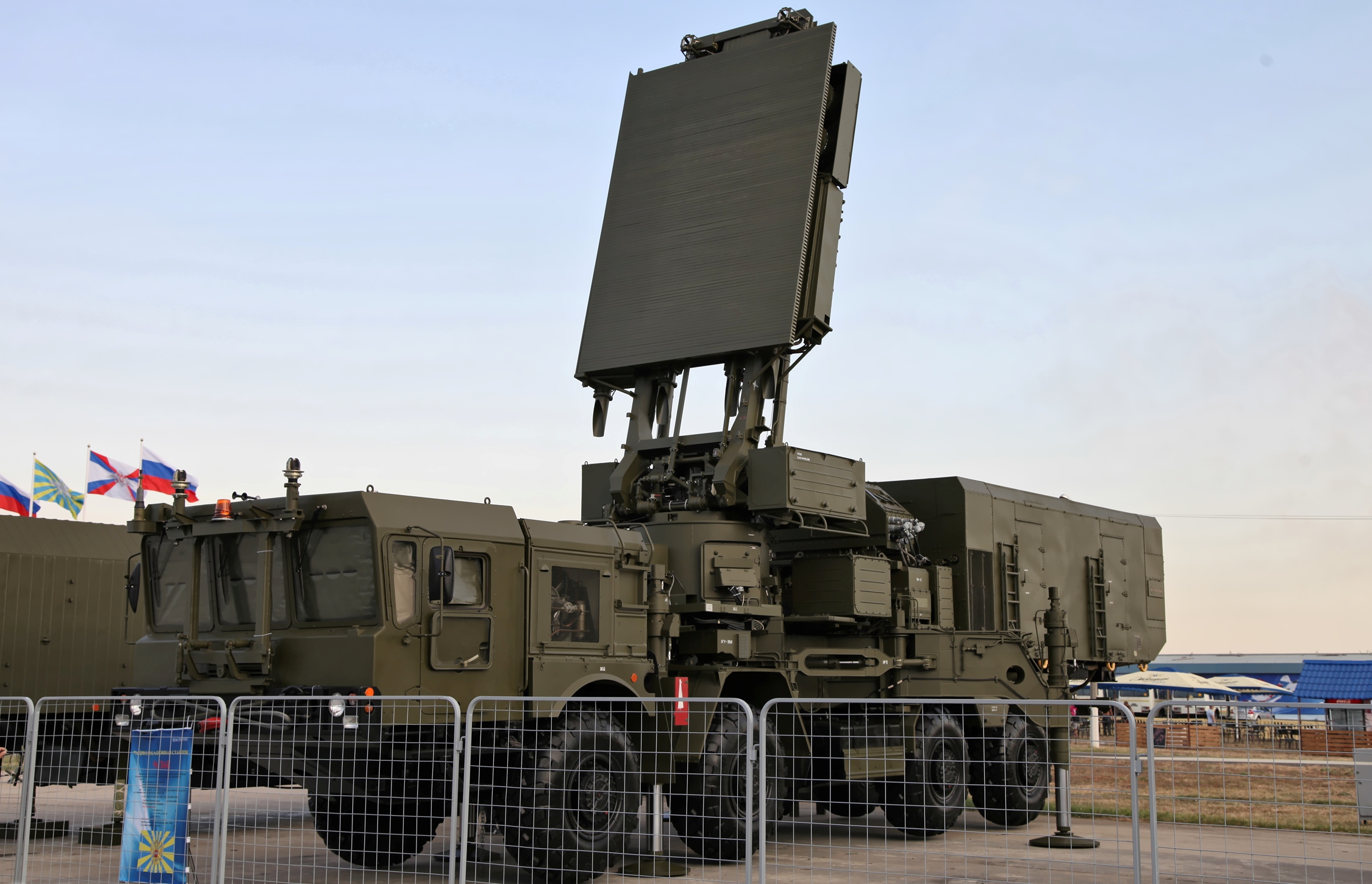
The 96L6E all-altitude acquisition radar for the S-300/S-400 family. Low-band radars like this serve as the detection layer in counter-stealth sensor chains, cueing higher-frequency fire-control radars. Photo: Vitaly Kuzmin / CC BY-SA 4.0

4. Interceptor Missiles and Engagement Kinematics
An air defense missile must reach the target with enough energy to maneuver for a terminal intercept. The key parameters are maximum range, maximum altitude, velocity, and terminal maneuverability (measured in g-forces).
Guidance Methods
Command guidance: The ground station computes the intercept solution and transmits steering commands to the missile. Simple and resistant to jamming, but accuracy degrades at long range.
Semi-active radar homing (SARH): The ground radar illuminates the target, and the missile homes on the reflected energy. The missile only needs a receiver, not a transmitter, reducing cost and weight. Used in Buk, Hawk, and older Patriot variants.
Active radar homing (ARH): The missile carries its own radar transmitter and receiver. It is autonomous after launch (fire-and-forget for the ground station). Used in Patriot PAC-3, Aster 30, and S-400's 40N6 missile.
Track-via-missile (TVM): A hybrid approach where the missile's seeker data is downlinked to the ground station, which computes guidance corrections and uplinks them. This combines the accuracy of active homing with the processing power of the ground station. Used in Patriot PAC-2.
Hit-to-Kill vs. Proximity Fuzing
Traditional SAMs use proximity (blast fragmentation) warheads that detonate near the target, spraying fragments. Hit-to-kill interceptors, like PAC-3 and THAAD, use kinetic energy from direct body-to-body impact. Hit-to-kill is essential against ballistic missile warheads because fragments may not destroy a hardened re-entry vehicle, while a direct hit at closing speeds of Mach 10+ delivers devastating kinetic energy.
5. Electronic Warfare: The Invisible Battlefield
Electronic warfare (EW) is as critical as the missiles themselves. Every modern air campaign begins with suppression of enemy air defense (SEAD) operations, and EW is the primary tool.
Electronic Attack
Noise jamming floods the radar receiver with broadband energy, reducing signal-to-noise ratio below detection threshold. Effective against older radars but modern systems use frequency agility and sidelobe blanking to counter it.
Deceptive jamming creates false targets by retransmitting modified radar pulses. Digital RF Memory (DRFM) technology captures the radar waveform and replays it with controlled modifications in range, velocity, and angle. This can generate convincing false tracks that consume the defender's engagement capacity.
Anti-radiation missiles (ARMs) like the AGM-88 HARM home on the radar's own emissions. The defense against ARMs is to rapidly shut down and relocate, or use decoy emitters. This creates a dilemma: radiate to track threats and risk ARM attack, or stay silent and lose situational awareness.
Electronic Protection
Defensive EW measures include frequency hopping (changing transmission frequency pulse-to-pulse to defeat spot jamming), pulse compression (using coded waveforms that are difficult to replicate), ultra-low sidelobe antennas (preventing jammers from entering through antenna sidelobes), and adaptive beamforming with phased arrays (placing antenna nulls in the direction of jammers).
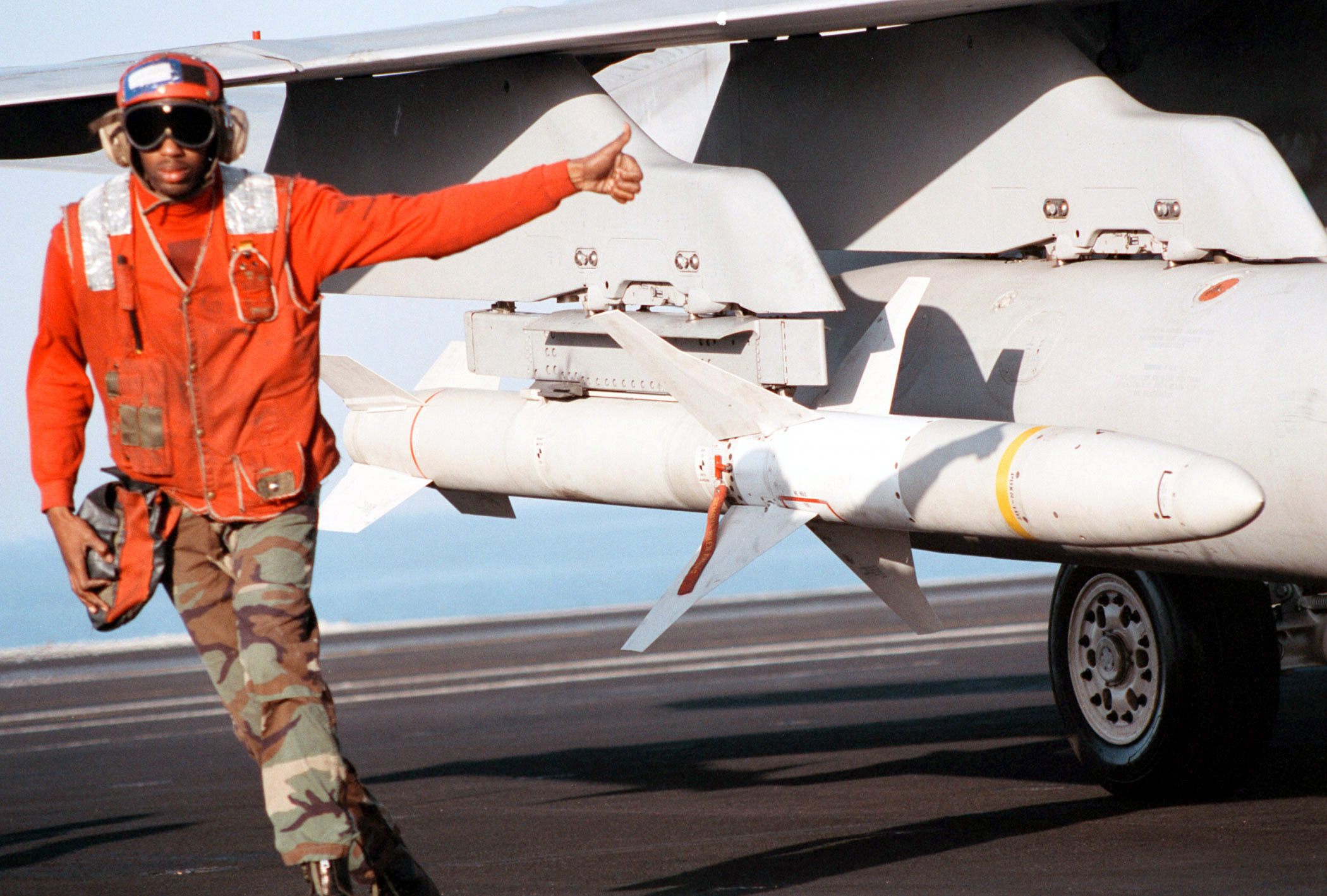
An AGM-88 High-speed Anti-Radiation Missile (HARM) on a U.S. Navy F/A-18C Hornet. Anti-radiation missiles home on radar emissions, driving the core EW dilemma: radiate to detect threats, or stay silent to survive. U.S. Navy / Public domain

6. Current Strategies in Air Defense
Distributed and Mobile Operations
Fixed air defense sites are vulnerable to precision strike. Modern doctrine emphasizes mobility: shoot-and-scoot tactics where the battery fires and relocates within minutes. The Russian S-300/S-400 family is designed for rapid deployment and teardown (deploy in 5 minutes, tear down in 5 minutes). This forces the attacker to find and strike a moving target rather than a known fixed position.
Network-Centric Warfare
Modern IADS connect sensors and shooters through high-bandwidth data links. A radar unit at one location can provide targeting data to a missile battery 100 km away. This decouples the sensor from the shooter, enabling engagement geometries that were previously impossible. The US Integrated Battle Command System (IBCS) and NATO's Link 16 network are examples of this concept in practice.
Network-centric operations also enable cooperative engagement: multiple sensors simultaneously track a target, and the system fuses their data to produce a track more accurate than any single sensor could achieve. This is particularly valuable against low-observable targets.
Counter-UAS
The proliferation of small, cheap drones has created an asymmetric problem. A $500 commercial drone can force the defender to expend a $100,000+ missile. Current counter-UAS approaches include directed energy weapons (high-energy lasers, high-powered microwaves), electronic warfare (GPS spoofing, command link jamming), kinetic solutions sized for the threat (small interceptor drones, programmable airburst ammunition), and detection networks using RF sensors, acoustic sensors, and small radars optimized for low-RCS targets.
The cost exchange ratio problem: The fundamental challenge of counter-UAS is economic. When a $3 million missile is the only tool available to defeat a $500 drone, the attacker wins the cost exchange regardless of tactical outcome. This is driving massive investment in directed energy and low-cost interceptor research. The US Army's DE M-SHORAD (Directed Energy Maneuver Short-Range Air Defense) program puts a 50kW laser on a Stryker vehicle specifically to address this imbalance.
7. Active Research Frontiers
AI and Machine Learning for Threat Assessment
Real-time classification of incoming threats is a bottleneck. Human operators must process radar tracks, IFF (Identification Friend or Foe) responses, and intelligence data to make engagement decisions. Research in neural network-based classifiers aims to automate target identification using radar signature analysis, kinematic profiling (flight path, speed, altitude patterns), and multi-sensor fusion. The goal is not to remove humans from the decision loop but to reduce cognitive load and decrease reaction time from minutes to seconds.
Hypersonic Defense
Hypersonic weapons (Mach 5+) present unique challenges. They fly at altitudes between traditional ballistic missile and aerodynamic intercept envelopes. They can maneuver during flight, making trajectory prediction extremely difficult. The detection window is compressed by speed, leaving seconds for engagement decisions.
Active programs include the US Glide Phase Interceptor (GPI) designed to intercept hypersonic glide vehicles during their glide phase, space-based sensor layers for early detection and persistent tracking of hypersonic threats, and new radar waveforms and processing algorithms optimized for detecting maneuvering targets at hypersonic speeds.
Directed Energy Weapons
High-energy lasers (HEL) offer near-zero marginal cost per shot and speed-of-light engagement. Current fielded systems operate in the 50-300kW range, effective against drones and small munitions. Research is pushing toward megawatt-class systems capable of engaging missiles and aircraft. Key challenges include atmospheric absorption and scattering (rain, fog, dust degrade beam effectiveness), thermal management (waste heat from laser generation), beam control over long distances (adaptive optics compensation for atmospheric turbulence), and power generation (sustaining megawatt output in a mobile platform).
Quantum Radar
Quantum illumination uses entangled photon pairs to detect targets. One photon is transmitted toward the target area, the other is retained. By correlating the reflected signal with the retained photon, the system can theoretically detect targets buried in noise levels that would be impossible for classical radar. While still in laboratory stages, quantum radar could fundamentally change the stealth vs. detection balance.
Autonomous and Swarm Defense
Research into autonomous interceptor swarms explores using groups of small, cheap, networked interceptors instead of single expensive missiles. Each interceptor in the swarm coordinates with others using distributed algorithms, and the swarm collectively optimizes its intercept geometry. This is where evolutionary computing and constraint-geometry approaches become relevant: optimizing swarm behavior under physical constraints (fuel, maneuverability, communication latency) is a combinatorial problem well-suited to genetic algorithms and constraint satisfaction techniques.
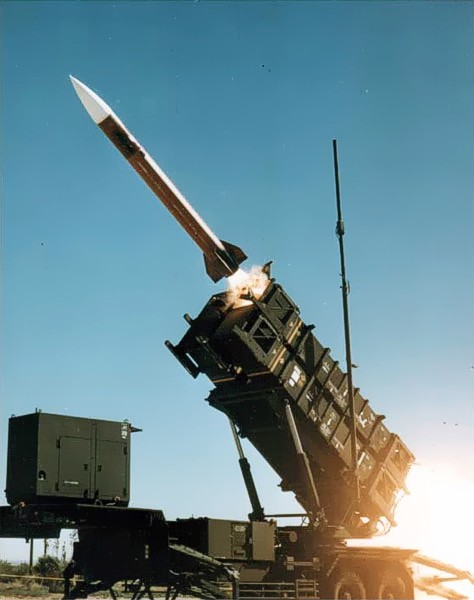
A Patriot missile launches during a live-fire exercise. Research frontiers in AI threat assessment, hypersonic intercept, directed energy, quantum radar, and autonomous swarm defense aim to extend the capabilities of current systems. U.S. Army / Public domain

8. The Systems Engineering Challenge
What makes air defense uniquely difficult from an engineering perspective is not any single component but the integration problem. The system must operate in real-time with hard deadlines (a missile arriving at Mach 3 does not wait for a buffer to flush). It must degrade gracefully when components fail or are destroyed. It must fuse data from sensors with different accuracies, update rates, and coordinate systems. It must make autonomous decisions about lethal force within legal and ethical frameworks. And it must do all of this while the adversary is actively trying to deceive, degrade, and destroy it.
This is why air defense remains one of the most challenging domains in systems engineering, and why the research frontiers span nearly every discipline: signal processing, control theory, optimization, machine learning, materials science, quantum physics, and real-time software engineering.
References and Further Reading
- Skolnik, M.I. Introduction to Radar Systems, 3rd ed. McGraw-Hill, 2001.
- Barton, D.K. Modern Radar System Analysis. Artech House, 1988.
- Neri, F. Introduction to Electronic Defense Systems, 3rd ed. SciTech Publishing, 2018.
- US Congressional Research Service. "Hypersonic Weapons: Background and Issues for Congress." Updated 2025.
- DARPA. "Glide Breaker Program" and "Blackjack Space Architecture" program documentation.
- Lloyd, S. "Enhanced Sensitivity of Photodetection via Quantum Illumination." Science, 321(5895), 2008.